


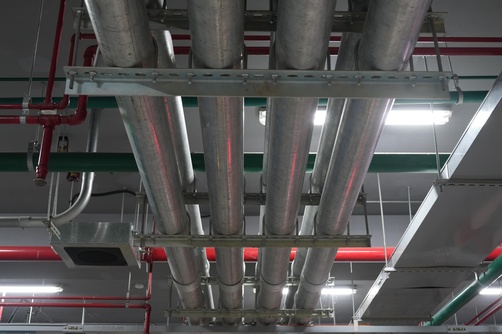
Fire safety is an essential consideration in the design and construction of commercial, industrial and specialist buildings. Ventilation ductwork can pass through walls, floors and other fire-separating elements, so the way it performs during a fire can have an important role in maintaining compartmentation and limiting the spread of fire and smoke. Fire-rated ductwork is designed for applications where defined fire resistance is required as part of the overall building fire strategy.
At SEWS Ductwork Services Ltd, we manufacture premium fire-rated ductwork in-house in the UK for a wide range of ventilation and extraction applications. From smoke extract and pressurisation systems to kitchen extract, car park extract and specialist fume extract, we can manufacture, deliver and install fire-rated ductwork to project specifications, with systems available for 60, 120 and 240-minute requirements. Our knowledgeable team can help you understand your ductwork requirements and provide a tailored quotation – contact us today!
What is fire-rated ductwork?
Fire-rated ductwork is ducting designed and tested for applications where ventilation, extraction or pressurisation systems need to maintain specified performance when exposed to fire. Unlike standard ventilation ductwork, a fire-resistant duct system is designed as part of a tested and assessed construction, with its performance dependent on the complete system specification, including materials, dimensions, joints, fixings and installation.
Firemac was established in 1989 and has developed into a major provider of passive fire protection products in the UK and internationally. Its FM Fire Duct systems have a proven track record across major construction projects in the UK, the Middle East, Africa, India and Asia.
Firemac FM Fabric PSA is a specialist fire protection glass fibre fabric bonded and mechanically fixed to the external face of galvanised or stainless-steel ductwork. It is designed for applications including ventilation, smoke extract, pressurisation and kitchen extract ductwork.
Firemac FM Fire Duct systems have been tested and assessed to BS 476 Part 24:1987 and EN 1366 Parts 1 and 8, demonstrating fire resistance of up to four hours for Duct Types A and B. The wider system information supplied for current applications also covers EN 1366 Part 9 where specialist smoke-extract performance is required.
In 2018, Firemac FM Fabric PSA received the Queen’s Award for Innovation, an award historically regarded as one of the UK’s most prestigious business awards.
SEWS Ductwork can manufacture fire-rated ducts to your project requirements, with solutions available for 60-, 120 and 240-minute fire resistance periods, subject to the relevant system specification. This provides a practical option for projects where ductwork needs to form part of a wider passive fire protection strategy.
How Fire Rated Ducting Helps Meet UK Building Regulations
Fire-rated ductwork can form an important part of achieving the fire performance required by building regulations. In England, Approved Document B provides statutory guidance covering fire safety within and around buildings, including provisions relating to ventilation ducts passing through fire-separating elements. The current guidance was updated in September 2026, so project teams should always work from the applicable edition and project requirements.
The exact solution depends on the building design, occupancy, fire strategy and location of the ductwork. However, several key considerations demonstrate why specifying an appropriate fire-resistant duct system is so important.
Maintaining fire compartmentation
Buildings are often divided into fire compartments to restrict the spread of fire and smoke. Where ventilation ductwork passes through a fire-separating wall or floor, the penetration must be designed so the required fire performance of the separating element is maintained.
Approved Document B identifies fire-resisting ductwork as one of the methods that can be used to maintain the fire performance of fire-separating elements. Other approaches can include fire dampers, fire-resisting enclosures or automatically activated fire and smoke dampers, depending on the application.
Supporting required fire resistance
Fire-rated ductwork is available in different tested configurations and resistance periods. A project may require 60, 120 or 240 minutes of fire resistance, depending on the fire strategy and the surrounding construction.
The important point is that the required rating should not simply be selected in isolation. The ductwork specification needs to correspond with the required performance of the fire-separating construction and the relevant tested or assessed system.
Protecting against fire and smoke spread
Ventilation systems can create pathways between different areas of a building. During a fire, an unsuitable duct arrangement could compromise compartmentation and allow fire or smoke to travel between spaces.
A correctly specified fire-resistant ductwork system helps reduce this risk by providing defined fire performance where the duct passes through or serves protected areas. This is particularly relevant to smoke extract and pressurisation systems, where ventilation performance may remain important during an emergency.
Meeting recognised testing requirements
Testing provides evidence that a fire-rated ductwork system can achieve a defined level of performance under specified conditions. Firemac FM systems have been tested against recognised standards including BS 476 Part 24:1987 and EN 1366 Parts 1 and 8.
For certain specialist smoke-extract applications, EN 1366 Part 9 is also relevant. The applicable test standard and classification should always be checked against the project specification rather than assuming that one test applies to every installation.
Providing a suitable solution for duct penetrations
Ductwork frequently passes through compartment walls, floors and other fire-separating elements. This makes the relationship between the duct and the surrounding construction particularly important.
Approved Document B states that where air-handling ducts pass through fire-separating elements, the fire performance should be maintained using an appropriate method. Fire-resisting ductwork is specifically identified as one available method.
Supporting specialist ventilation applications
Fire-rated ducting is not limited to ordinary ventilation. Depending on its tested application and specification, it can be used for smoke extract, kitchen extract, pressurisation, car park extract and specialist fume extract systems.
These environments can present different fire risks and performance requirements. Selecting a system designed and tested for the intended application is therefore essential.
Helping support a documented fire strategy
Building fire safety involves more than selecting individual products. The fire strategy should consider how different elements interact, including compartment walls, floors, dampers, fire doors, escape routes, smoke control systems and ventilation.
Fire-rated ductwork can form one component of that wider strategy. Working from the project drawings, specifications and fire strategy helps ensure that the ductwork is manufactured to the required configuration.
Making compliance part of the design process
Fire performance should be considered before ductwork reaches site rather than treated as an installation-stage problem. Early specification allows dimensions, materials, fire ratings, access requirements, supports and interfaces with other systems to be considered together.
This can reduce the likelihood of costly alterations and help the installation team understand exactly what has been specified.
The Importance of Fire Rated Ducting
Fire-rated ductwork is ultimately about more than the duct itself. It forms part of a building’s wider fire safety arrangements and can be particularly important wherever ventilation routes cross compartment boundaries or need to remain functional during fire conditions.
There are several reasons why selecting an appropriate system deserves careful consideration.
1. Supports fire compartmentation
Fire compartmentation is intended to limit fire and smoke movement between designated areas. Fire-resistant ductwork can help maintain the required performance where ventilation routes interact with fire-separating construction.
2. Protects ventilation systems
Certain ventilation systems need to continue providing their intended function during a fire. Smoke extract, pressurisation and specialist extract systems may therefore require specifically tested fire-resistant ductwork.
3. Provides tested fire performance
A tested system provides evidence of its performance under defined conditions. Firemac FM systems have been tested to recognised fire-resistance standards, helping project teams specify a system with documented performance characteristics.
4. Supports demanding commercial projects
Large commercial and infrastructure projects can contain extensive ventilation networks running through multiple compartments. Fire-rated ductwork provides a solution designed for applications where fire resistance forms part of the ductwork specification.
5. Offers bespoke manufacturing
No two ventilation systems are necessarily identical. Duct dimensions, routes, fittings, connections and access requirements can vary significantly. In-house manufacturing allows SEWS Ductwork to produce bespoke components to agreed project requirements.
6. Can improve installation planning
Manufacturing the fire protection system as part of the ductwork process can help provide consistency between the specified system and the products delivered to site. Good planning can also reduce unnecessary specialist work during installation.
7. Provides application flexibility
Fire-rated ductwork can be specified for a range of applications, including ventilation, smoke extract, kitchen extract, pressurisation, car park extract and specialist fume extraction, subject to the relevant tested configuration.
8. Helps create a coordinated fire safety approach
Ductwork should be considered alongside the building’s wider fire strategy. Coordinating the ductwork design with compartmentation, dampers and other fire safety measures can help create a more consistent approach to fire performance.
Ultimately, the correct fire-rated ductwork specification should be based on the requirements of the individual building and its fire strategy. Professional design coordination remains essential to ensure the selected system is suitable for its intended application.
How can SEWS Ductwork help?
SEWS Ductwork Services Ltd provides a complete fire-rated ductwork manufacturing service, from initial specification through to delivery. Our team can work from drawings, schedules, dimensions and other project information to understand the requirements before manufacturing begins.
We manufacture Firemac FM fire-resistant ductwork in-house in the UK. This includes rectangular and bespoke ducting such as straight duct, bends, tapers, offsets, transitions, transformations, plenums, filter boxes, spigot plates, condensate trays and other made-to-measure fittings.
Our process starts with your project requirements. You can send us drawings, schedules or dimensions, together with quantities, required delivery dates and any known fire-performance or pressure requirements. Our team will review the information and discuss the appropriate manufacturing specification.
Once the specification has been agreed, our experienced team manufactures the ductwork in-house. This gives us direct control over production and allows communication to remain straightforward throughout the manufacturing process.
When production is complete, we can arrange delivery to site based on your requirements. SEWS Ductwork can also manufacture and install fire-rated ducts where required, helping provide a coordinated service for projects requiring 60, 120 or 240-minute fire-resistant ductwork.
In Conclusion: Building Fire Safety from the Inside Out
Fire safety should be considered at every stage of a building’s design, and ductwork deserves careful attention because ventilation routes can cross important fire-separating elements. Choosing a suitable fire-resistant ductwork system can help maintain compartmentation and support the wider fire strategy when the building needs it most.
As with all fire safety measures, the correct specification depends on the building, application and overall design. Current Building Regulations guidance, the fire strategy and relevant testing requirements should always be considered by the appropriate design and construction professionals. Contact us today for more information!
FAQs
What is fire-rated ductwork?
Fire-rated ductwork is designed for ventilation, extraction or pressurisation applications where defined fire-resistance performance is required. Its performance depends on the complete tested or assessed system.
How long can Firemac ductwork resist fire?
Firemac FM configurations can provide fire resistance of up to 240 minutes, or four hours, subject to the selected system and project requirements.
Which standards has Firemac FM been tested to?
Firemac FM systems have been tested and assessed to BS 476 Part 24:1987 and EN 1366 Parts 1 and 8. Relevant specialist smoke-extract applications may also involve EN 1366 Part 9.
What types of fire-rated ducting do you manufacture?
SEWS Ductwork manufactures rectangular and bespoke ductwork, including straight sections, bends, tapers, offsets, transitions, transformations, plenums, filter boxes, spigot plates and other fittings.
Is your fire-rated ducting manufactured in the UK?
Yes. SEWS Ductwork manufactures its rectangular and bespoke ductwork in-house in the UK, providing direct control over production and quality.
If your project requires reliable, professionally manufactured fire-rated ductwork, SEWS Ductwork Services Ltd can help. From initial drawings and specifications through to in-house manufacture and delivery, our team can provide a solution tailored to your requirements.
Whether you require 60, 120 or 240-minute fire-rated ductwork, contact SEWS Ductwork today to discuss your project, send us your drawings or dimensions and request a tailored quotation.